
Nestled in Atlanta’s Poncey-Highland neighborhood, a grocery store with a past as storied as any crime thriller is the notorious “Murder Kroger.”
This nickname, which first took hold in the early 1990s, has persisted for decades, long after two fatal shootings and the discovery of a corpse left an indelible mark on the community’s memory.
Located at 725 Ponce de Leon Avenue, this Kroger supermarket has seen more than its fair share of eerie events. In 1991, tragedy struck when 25-year-old Cynthia Prioleau was shot and killed in the parking lot.
Eleven years later, in 2002, a disturbing discovery was made—a foul odor led to the body of a man decomposing inside a car.
And even after a renovation aimed at giving the store a fresh identity as “Beltline Kroger,” the tragic legacy continued with the 2015 murder of Joshua R. Richey, a construction worker from Alabama who was shot in the chest.
Despite efforts to shed its grisly reputation, the nickname “Murder Kroger” stuck, earning the store an almost mythological status in Atlanta’s local folklore.
A name that won’t die
Kroger’s 2016 decision to demolish the original building and replace it with a sleek, modern grocery store as part of the 725 Ponce mixed-use development was a bold attempt to wipe the slate clean.
But like a ghost that refuses to rest, the nickname lingered. By the time the new store opened in 2019, locals were still referring to it as “Murder Kroger,” much to the dismay of corporate executives who had hoped the revamped store—complete with a bike repair station, pedestrian-friendly access to the Atlanta BeltLine, and landscaped parking lots—would signal a new beginning.
Even a song titled “Murder Kroger” by the band Attractive Eighties Women immortalized the store’s dark past, cementing the moniker in popular culture.
A history of strange events
The unfortunate deaths don’t just define the story of Murder Kroger.
Over the years, the store has been the site of a string of bizarre incidents. In January 1990, a bomb-like device was found inside the supermarket, but thankfully, it didn’t detonate. Then, in October 1999, a man brazenly robbed the Bank of America branch located inside the store.
The tragedies that gave rise to the infamous nickname are never far from people’s minds.
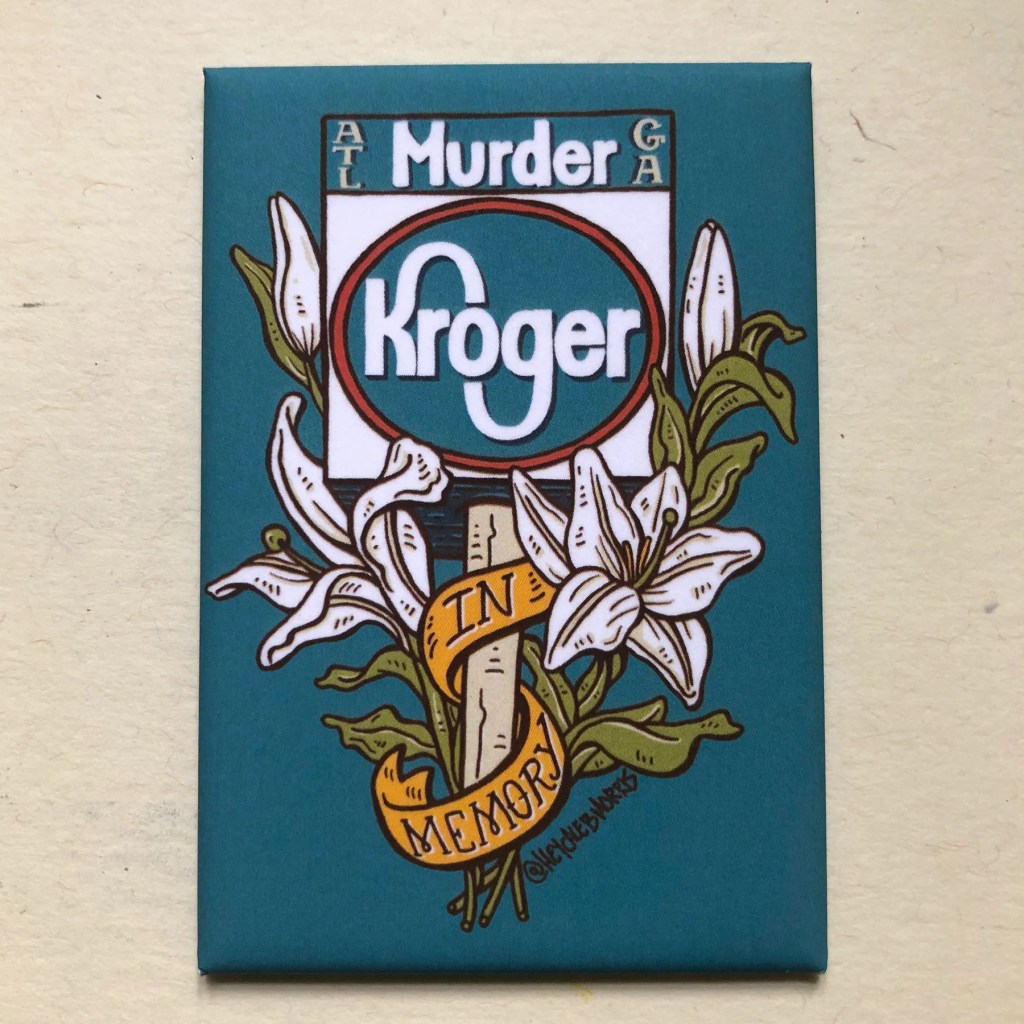
Cynthia Prioleau’s 1991 murder remains unsolved, a haunting chapter in the store’s history. The discovery of the decomposing body in 2002 and the murder of Georgia State University student Lee Lowery in 2012 in the nearby Ford Factory Lofts—though technically not on Kroger property—only added to the eerie aura surrounding the supermarket.
And then there’s the 2015 murder of Joshua R. Richey, a father of four, shot in the parking lot in broad daylight.
Despite renovations, updates, and a complete rebuild, the store’s violent history seems to cling to it, as if the past refuses to be erased.
The ongoing legacy of Murder Kroger
Even today, the name “Murder Kroger” has outlasted all efforts to rebrand the store. Kroger officials hoped the modernized store would break free from its dark reputation, but locals remain attached to the nickname.
Attempts to shift the moniker to a nearby Kroger on the Beltline fell flat, and many in Atlanta still refer to the new store by the old name.
The legend of Murder Kroger, it seems, is a name—and a story—that just won’t die.
In the end, while the physical building may have changed, and the area around it has been transformed, the identity of “Murder Kroger” remains as much a part of Atlanta as the store itself.
It’s a reminder that sometimes, no matter how hard we try to move on from the past, certain stories become immortal—echoes of history that continue to shape a place long after the events have faded into memory.

 God Is In The Radio
Leave a comment