
There is a moment when the veil between the past and the present grows thin. At that moment, you feel a chill, a shadow shifting in the periphery of your vision, a whisper carried by the wind that doesn’t belong to this world.
We call it a ghost, but what is a ghost? Is it a spirit, a lost soul clinging to the world of the living? Or is it something far more intimate, far more personal? Perhaps ghosts are not specters of the dead but echoes of our own past, manifestations of the regrets, guilt, and trauma we carry with us, shadows that follow us through the corridors of time.
Ghosts linger because we do not know how to let them go. They are fragments of memory, tethered to a moment or an event we could not resolve, haunting us.
They are not here to scare us but to remind us. In literature, film, and myth, ghosts represent the parts of ourselves that remain unfinished, unresolved, and unhealed. We can escape the present, but the past has a way of rising, like the fog that rolls in on a forgotten shoreline, silently swallowing the present whole.
This is what it means to be haunted—not by ghosts, but by the weight of what we have left undone, the burdens of history and emotion that refuse to be forgotten.
The ghost as regret
Regret is a ghost with a thousand faces, each a memory of something left unsaid, undone. It lingers at the edges of our lives, surfacing in quiet moments, slipping into our thoughts when we least expect it.
Like the ghost of Hamlet’s father, it calls out to us, demanding attention and justice for something we cannot change. Hamlet’s father, trapped between life and death, is the embodiment of unfinished business—a life cut short, a demand for a resolution that the living must carry forward.
In our own lives, regret often feels the same. It is a specter that arises when we think of the words we should have spoken, the paths we should have taken, and the people we should have held onto a little longer.
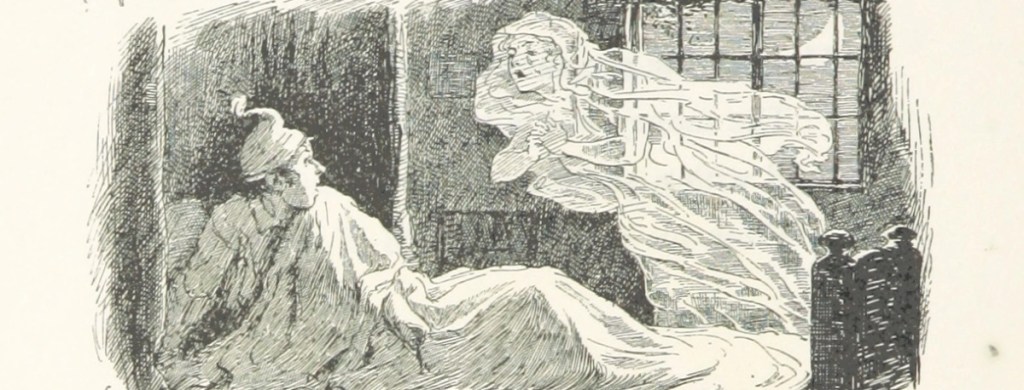
These regrets accumulate, becoming the ghosts that haunt us long after the moments have passed. Each memory is like a doorway left ajar, a part of our past that refuses to close because we cannot reconcile the choices we made.
The most painful aspect of regret is its persistence. Like a haunting, it never truly fades. It may lie dormant for years, but all it takes is a reminder—a place, a scent, a passing thought—and the ghost returns.
The past echoes in the present, its voice clear and piercing. We try to bury it and push it away, but it always resurfaces, reminding us of what could have been and should have been. In this way, regret is the ghost we carry daily, always out of sight but never truly gone.
The ghost as guilt
Where regret whispers, guilt shackles. Guilt is the heavy chain that drags behind us, a constant reminder of our failings and missteps. The specter returns not to remind us of what we lost but of what we have done.
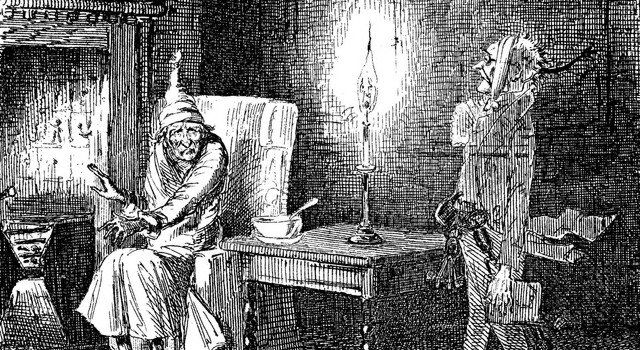
In A Christmas Carol, Dickens gives us Jacob Marley, the ghost condemned to wander the earth in chains forged by his own greed and selfishness. Marley’s ghost is personified by guilt; he is a man bound by the weight of his actions and unable to escape the consequences of his life.
Guilt, too, binds us. The ghost appears in the dead of night when the world is quiet, and our thoughts turn inward. It tells us that we are responsible and that we cannot escape the choices we have made.
If regret is a whisper and guilt a chain, trauma is a scream.
Unlike regret, which mourns what could have been, guilt condemns what is. It tells us that we are to blame, that we are the ones who bear the weight of our actions. And like ghosts, guilt traps us in the past, making it impossible to move forward.
But guilt, like all ghosts, is a manifestation of something deeper. The chain binds us to memories we wish we could forget, the moments we try to bury because we cannot face them. It is the echo of our conscience, the part of ourselves that knows we must confront the truth if we are ever to be free.
Yet, as with Marley, confronting guilt often means facing the things we fear most—our moral failings and imperfections. And so, guilt lingers, haunting us until we find the courage to break its chains.
The ghost as trauma
If regret is a whisper and guilt a chain, trauma is a scream. Trauma does not haunt us gently—it seizes us, pulling us back into the past with a force we cannot resist. It is the ghost that refuses to remain silent, the wound that refuses to heal.
In horror films like The Babadook or The Others, the ghosts are not merely supernatural beings—they are manifestations of trauma. These psychological scars haunt the characters long after the events that caused them have passed.
Trauma resurfaces in unexpected ways, often when we least expect it. Like a ghost, it creeps into our lives unbidden, triggered by the smallest of things—a smell, a sound, a memory.
And when it does, it takes us back, pulling us into the past and forcing us to relive the pain we thought we had left behind. It is relentless, demanding our attention and forcing us to confront the things we would rather forget.
But unlike regret or guilt, trauma is not something we can simply confront and resolve. It lingers because it has altered us, changing the way we see the world and ourselves.
It is a part of us now, a ghost that follows us wherever we go. In this way, trauma is perhaps the most persistent ghost of all, for it is not just a memory—it is a wound that lives inside us, always waiting for the right moment to resurface.
Cultural ghosts
The ghosts that haunt our personal lives are not unique to us—they are a part of the human experience, a theme that has echoed through literature, film, and culture for centuries.
In Gothic fiction, ghosts have long been used as metaphors for societal anxieties and personal turmoil. In Toni Morrison’s Beloved, the ghost of a murdered child is a symbol of the trauma of slavery, a haunting that speaks to the inescapable weight of history. Similarly, in Henry James’ The Turn of the Screw, the ghosts are not merely supernatural—they represent the psychological torment of the governess, a manifestation of her fears and desires.
In modern pop culture, ghosts continue to serve as symbols of trauma and memory. In The Haunting of Hill House, the ghosts are not just spirits—they are manifestations of the characters’ unresolved grief and trauma.
In American Horror Story, ghosts are often tied to the location of their death, unable to escape the places that define their pain. These stories use ghosts to explore the ways in which we are haunted by our past and the way trauma and memory shape our present and future.
In fiction and pop culture, ghosts are not just symbols of the supernatural—they are reflections of ourselves.
They are the parts of us we cannot escape, the memories and emotions that follow us through life. They are reminders that the past is never truly gone and continues to live on in the present, shaping who we are and who we will become.
Collective hauntings
Individuals are haunted by their personal ghosts, but entire societies can be haunted, too. The weight of history is a collective haunting, a ghost that lingers over cultures and nations, reminding them of the traumas they have inflicted or endured.
In Pan’s Labyrinth, the ghosts of the Spanish Civil War loom large, shaping the characters’ lives and the world they inhabit. In The Sixth Sense, the ghosts serve as a metaphor for the unresolved trauma of both individuals and society at large.
Ghosts are not here to frighten us but to remind us.
History itself is a ghost, a presence that refuses to be forgotten. The traumas of war, colonization, and oppression linger in the collective memory, shaping the present in ways we may not even realize.
These cultural ghosts demand recognition, asking us to acknowledge the past and its impact on the present. They are the ghosts of wars fought and lost, of lives taken and histories erased, and they remind us that the past is never as distant as we might like to believe.
Living with our ghosts
In the end, we may never entirely escape our ghosts. Regret, guilt, trauma—they are a part of who we are, shadows that follow us through life. But perhaps the goal is not to banish these ghosts but to learn to live with them—to confront them, acknowledge them, and, in doing so, find peace.
Ghosts are not here to frighten us but to remind us. They remind us that the past is not something we can leave behind but must carry with us, learn from, and ultimately come to terms with.
We are all haunted, in one way or another, by the echoes of our past. Perhaps, by accepting our ghosts, we can find a way to move forward, not unburdened but at peace with the weight we carry.

 God Is In The Radio
Leave a comment