
Halloween, also known as Hallowe’en, All Hallows’ Eve, or All Saints’ Eve, is an enchanting celebration observed on October 31st (obviously), the night before All Saints’ Day. This mystical holiday kicks off the Christian festival of Allhallowtide, a time dedicated to honoring saints, martyrs, and departed loved ones.
But in modern times, Halloween has become synonymous with fun and fright, merging the sacred with the spooky, inviting us to revel in the macabre and supernatural.
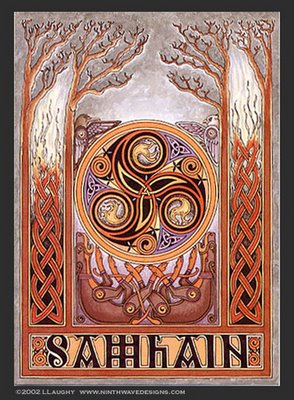
Halloween’s origins are a melting pot of Christian and Celtic influences. One theory traces its roots to the ancient Gaelic festival of Samhain, a harvest celebration marking the end of the “light” half of the year and the beginning of the “dark” half.
Samhain was believed to be a liminal time when the boundary between the living world and the spirit world was thinnest, allowing spirits to roam freely. Early Christian missionaries may have incorporated these pagan customs into the Church’s calendar, establishing All Hallows’ Day to honor saints and the faithful departed.
While some scholars suggest Halloween began purely as a Christian tradition, blending Celtic customs and Christian practices over centuries created the holiday we know today.
Irish and Scottish immigrants carried their traditions to North America in the 19th century, sparking the growth of Halloween’s popularity. From there, it exploded in popularity, becoming the global phenomenon it is now.
Modern Halloween is an eclectic mix of playful traditions and eerie customs that appeal to all ages. Trick-or-treating, perhaps the most iconic Halloween activity, has its roots in medieval “souling,” when poor children would go door-to-door offering prayers for the dead in exchange for food. This evolved into the tradition of dressing in costumes and going house-to-house asking for candy.
Carving jack-o’-lanterns out of pumpkins is another beloved tradition. It is said to originate from the Irish practice of carving scary faces into turnips to ward off evil spirits. Pumpkins, native to North America, became a convenient substitute, and today’s glowing jack-o’-lanterns can be found on porches across the globe.
Other festive activities include costume parties, haunted houses, bonfires, and classic games like apple bobbing and mirror scrying. While these customs are often lighthearted today, they are rooted in ancient rituals meant to protect against spirits or foretell the future.
Amidst the ghoulish fun, many still observe Halloween’s deeper spiritual roots. For Christians, All Hallows’ Eve is a time to reflect on mortality and honor the souls of the departed.
In some places, families light candles on the graves of loved ones or attend church services to remember the dead. The traditions of feasting on vegetarian foods like apples and soul cakes, lighting candles, and offering prayers have long been a part of Halloween’s quieter, contemplative side.
Historically, Christians believed that souls might wander the earth on this night, seeking peace before the afterlife. To avoid recognition by vengeful spirits, people wore masks and costumes—a custom that may have given rise to modern-day Halloween disguises.
Amidst the ghoulish fun, many still observe Halloween’s deeper spiritual roots.
Thanks to American cultural influence, Halloween customs have spread worldwide, from Europe to Asia and beyond. As the holiday crossed borders, it took on new life in different cultures, blending with local traditions.
In Mexico, for instance, the Day of the Dead shares some similarities with Halloween, both celebrating the return of spirits with feasts and offerings.
Even as Halloween continues to evolve, it remains a night where we embrace our fears, face the unknown, and celebrate the thin veil between the worlds of the living and the dead.

 God Is In The Radio
Leave a comment